Cooling-system visual inspection and pressure testing
Confirm applicability and scope for the specific vehicle before work begins.
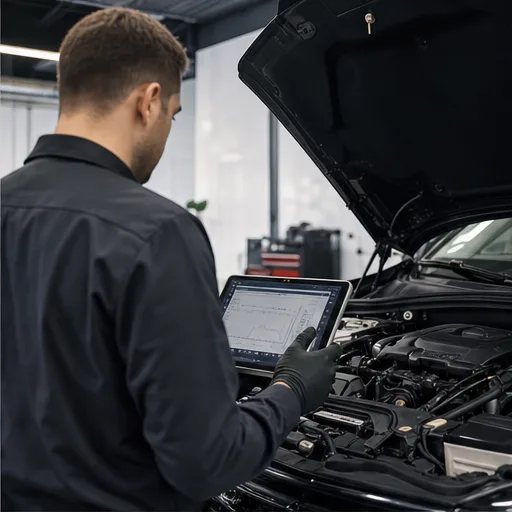 DEMONSTRATION PHOTOGRAPHY
SERVICE / 06LONDON, ONTARIO
Temperature, pressure, mechanical health
Overheating, leaks, odours, noise, misfires, power loss, and fluid concerns. Start with what changed; use inspection and testing to define what comes next.
Fictional service page · no diagnosis, price, outcome, or availability is guaranteed.What brings drivers here
A useful appointment request describes conditions—not conclusions. Note when the concern happens, what makes it better or worse, and whether any warning appears.
Describe the concern ↗The temperature gauge rises or an overheat warning appears
Coolant is low, leaking, or leaves an odour
The engine runs rough, lacks power, or makes a new noise
Steam or unusual exhaust smoke is visible
A recent repair did not resolve the concern
What the service may include
Actual tests depend on the vehicle, access, findings, equipment, and authorization. This list is a configurable demonstration—not a fixed promise.
Confirm applicability and scope for the specific vehicle before work begins.
Confirm applicability and scope for the specific vehicle before work begins.
Confirm applicability and scope for the specific vehicle before work begins.
Confirm applicability and scope for the specific vehicle before work begins.
Confirm applicability and scope for the specific vehicle before work begins.
From observation to option
Continuing to drive an overheating engine can cause severe damage. If the gauge rises abnormally, steam appears, or a warning instructs you to stop, pull over safely and shut the engine off.
Web content cannot determine whether a vehicle is safe to drive. Stop when safe and seek qualified advice if control, braking, temperature, oil pressure, smoke, severe noise, or drivability changes suddenly.
Avoid further operation if overheating or oil-pressure risk is present.
Check levels, leakage, contamination, belts, hoses, and obvious damage.
Use pressure, temperature, scan, or mechanical tests to isolate the cause.
Confirm operating temperature and system integrity after approved work.
Plain-English next steps
Good service content leaves room for testing, monitoring, staged work, and referral—not just replacement.
A hose, radiator, pump, thermostat, fan, or sealing issue may be found.
Engine mechanical testing may be recommended.
Contamination or repeat overheating may change the repair scope.
A staged repair and monitoring plan may be appropriate.
Northline Auto Works is a fictional single-location shop. This demonstration page serves London, Byron, Lambeth, Hyde Park, Masonville, St. Thomas, Dorchester, Komoka, Delaware, and Strathroy without claiming a physical location in each community.
Engine + cooling
These answers are educational template copy. Real policies, capabilities, fees, parts, and timing must be confirmed with the client.
Adding the correct fluid may not address the cause, and opening a hot system can cause injury. Follow the owner’s manual and seek qualified advice.
Airflow, fan operation, coolant circulation, load, and other conditions can change at low speed. Testing is needed.
No. Different formulations can share colours. Use the vehicle manufacturer’s specification, not colour alone.
Document the conditions and arrange an inspection. Some faults are intermittent, and overheating can have consequences even after temperature returns to normal.
Start with the concern
Good diagnosis begins with useful context. Share the vehicle, the symptom, and when it happens. A live shop would review the request before confirming timing.
This demonstration form is not connected to a live CRM or repair-shop management system. No information is transmitted or stored.