Built for local businesses that are done losing good leads. Find the gaps ↗
Plumbing website design

Plumbing website design for urgent calls and planned work.

A customer with a leak behaves differently from someone comparing water-heater options. Service Leads builds plumbing websites that make both paths clear, credible and easy to act on from a phone.

URGENT INTENT

Fast call access and clear response expectations.

PLANNED WORK

Service detail, options and estimate requests.

AFTER THE CLICK

Lead capture, routing and missed-call follow-up.

Two customer journeys

Protect the emergency call without neglecting higher-consideration work.

Some plumbing searches need an immediate answer. Others involve comparison, scheduling and questions about the right service. One generic contact page cannot serve both moments well.

We separate urgent and planned paths, then keep service, location and trust information close to the action the customer is ready to take.

  1. 01Urgent mobile call pathway
  2. 02Plumbing service-page architecture
  3. 03Quote and appointment request strategy
  4. 04Local SEO and response-system foundations
01 / Urgency first

Make the call path obvious when every minute feels expensive.

A mobile visitor should not have to open a menu, copy a number or read several paragraphs before finding the emergency route. The call action, coverage area and realistic response expectation belong near the top.

We keep that path prominent without labelling every service an emergency or making promises the business cannot consistently keep.

  • Tap-to-call actions
  • Hours and coverage clarity
  • Emergency versus routine routing
  • No invented arrival-time promises
02 / Service intent

Give each important plumbing service room to answer the real questions.

Drain problems, leaks, fixtures and water-heating work have different symptoms, risks and next steps. Focused pages help customers recognize the right service and help the website compete for more specific searches.

The final architecture is based on the services the company actually offers—not a copied list of every possible plumbing keyword.

03 / Response system

Do not let a missed call become the end of the lead.

Call forwarding, missed-call text-back or an approved AI receptionist can create a useful next step when the team is driving or already on a job.

Those tools are scoped separately, with clear guardrails around emergencies, pricing, technical advice and human escalation.
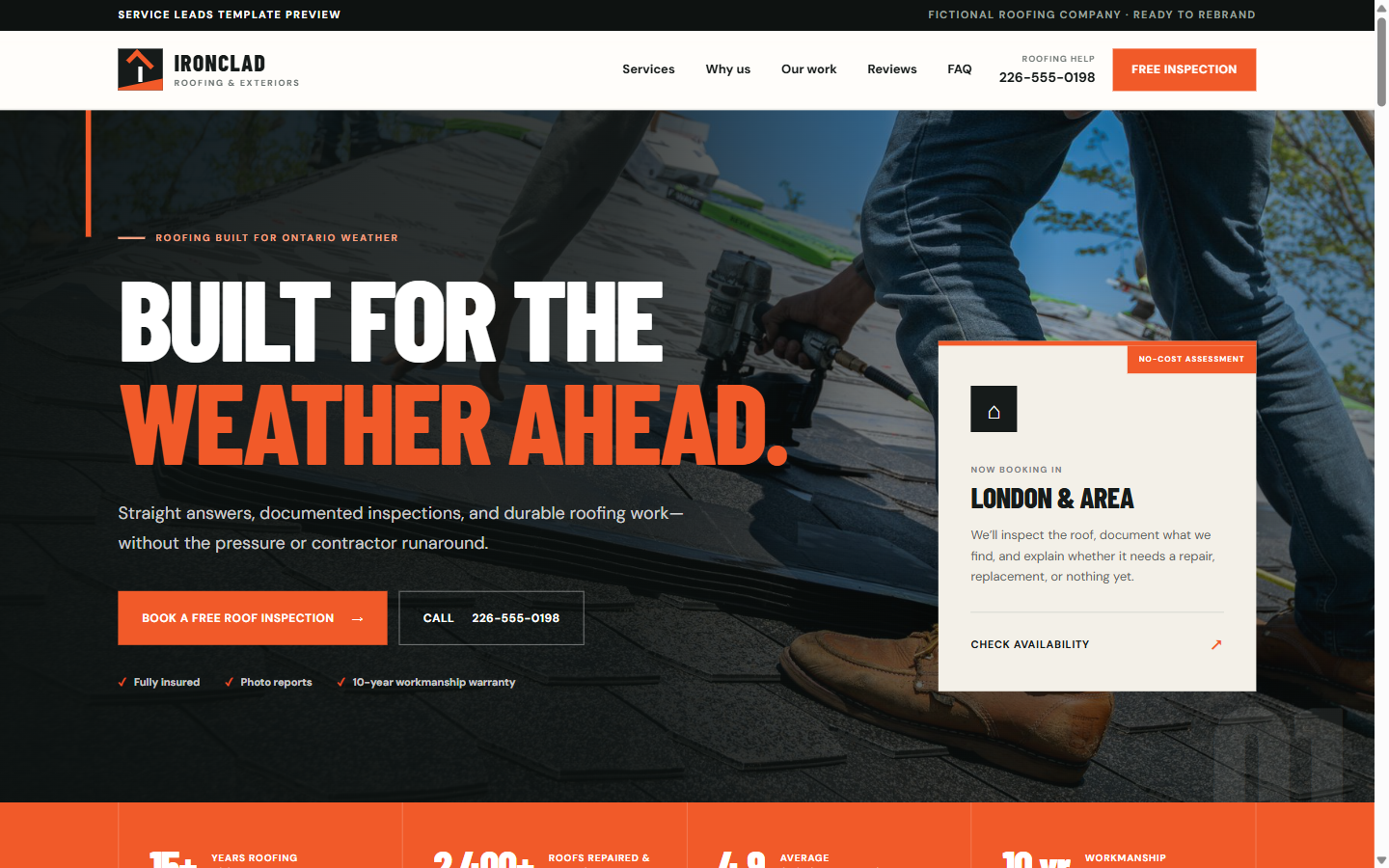
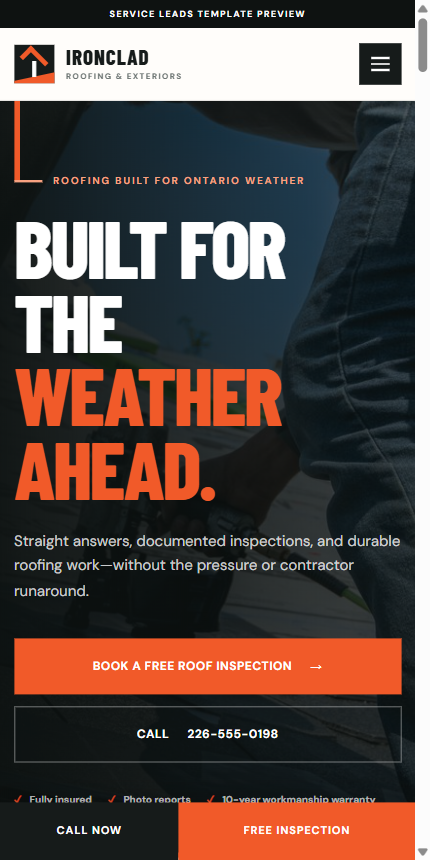
Adjacent service-business proof

See how an urgent local-service concept handles trust and action.

The Ironclad Roofing demonstration uses visible mobile actions, urgent service routes and a structured inspection request—the same interaction principles a plumbing site needs.

This is a roofing concept, not a plumbing client case study. It demonstrates the design and lead-path approach only.

hotpink-swallow-803045.hostingersite.com
Ironclad Roofing Co. demonstration website
Ironclad Roofing Co. mobile demonstration website
Featured demonstration

Ironclad Roofing Co.

Roofing contractor · Durable, direct and weather-ready

Read the demonstration case study ↗
Straight answers

Questions before the next step.

The scope should match the business, existing systems and real customer path. These answers establish the practical boundaries.

What pages should a plumbing website have?+

The right list depends on the company, but it commonly includes focused pages for the most important services, clear service-area information, trust and process content, contact options and emergency guidance when genuinely offered.

Can the website separate emergency and routine inquiries?+

Yes. The page and form structure can provide a direct urgent call path while routing planned work into a quote or appointment request.

Can you add missed-call text-back or an AI receptionist?+

Those tools can be added when they fit the phone setup and business process. They are scoped separately and use approved answers, routing rules and human escalation.

Will you create a page for every plumbing service?+

We recommend pages for meaningful services customers search for and the business wants more of. We do not publish thin pages simply to repeat keyword variations.

How much does plumbing website design cost?+

Current starting options are $129 per month for a managed website, $349 per month for the Local Lead Engine and $999 one-time for a defined-scope buyout. Additional pages and integrations are scoped separately.

Can you work with an existing plumbing website?+

Yes. We first review whether the current site can support a clearer mobile path, better service structure and stronger lead capture before recommending a rebuild.

The expensive part is already happening

You are already paying for every lead you miss.

The quick contact form below takes about 30 seconds. Tell us what is happening now and we’ll help identify the first practical gap.